You can improve flexibility at home without a gym membership or complicated workout plan. A simple routine built around gentle, controlled stretches can help you work on areas such as the hamstrings, calves, hips, ankles, and shoulders.
The key is consistency rather than forcing your body into extreme positions. Move gradually, stay within a comfortable range of motion, and build a stretching routine you can realistically maintain.
This guide explains how to improve flexibility at home, including beginner-friendly stretching ideas, how to warm up, how often to stretch, and how an assistive stretching tool can fit into your routine.
1. Start With a Simple Flexibility Routine
If you are new to stretching, begin with a routine that is easy to repeat. A short session performed consistently can be more practical than attempting a long, demanding routine that is difficult to maintain.
Choose several areas you would like to work on, such as:
- Hamstrings
- Calves
- Hips
- Ankles
- Shoulders
- Upper-body mobility
- Lower-body mobility
Keeping your routine simple makes it easier to develop a regular stretching habit.
2. Warm Up Before Stretching
Light movement before deeper stretching can help prepare your body for your flexibility routine.
You might begin by walking around the house, gently moving your arms and legs, or performing controlled mobility movements before holding longer stretches.
Avoid immediately forcing yourself into your deepest possible stretch.
3. Move Slowly Into Each Stretch
Stretching should be controlled rather than rushed.
Gradually move into a position until you feel a comfortable stretch. Avoid bouncing, jerking, or forcing yourself farther than feels appropriate.
Once you reach a comfortable position, remain relaxed and breathe normally.
4. Try Hamstring Stretches at Home
The hamstrings run along the back of the thighs and are commonly included in flexibility routines.
One simple seated option is to extend one leg in front of you while keeping the other leg comfortably positioned. Gradually hinge forward while keeping the movement controlled.
Stop when you feel a comfortable stretch along the back of the thigh. Do not force yourself farther simply to increase the range of motion.
5. Work on Calf and Ankle Flexibility
Calf and ankle mobility are involved in everyday movements such as walking, standing, and climbing stairs.
A simple standing calf stretch can be performed while facing a wall:
- Place your hands on the wall for support.
- Step one foot behind you.
- Keep the rear heel comfortably toward the floor.
- Shift your weight forward gradually.
- Repeat on the opposite side.
You can also include slow, controlled ankle circles while seated.
6. Add Gentle Hip Stretches
Hip mobility plays a role in many everyday movements, including walking, bending, and getting up from a seated position.
Choose hip stretches that allow you to maintain control and balance. Begin with a comfortable range of motion and increase gradually rather than forcing the movement.
7. Include Shoulder and Upper-Body Stretches
Flexibility routines often focus heavily on the legs, but your shoulders and upper body can also benefit from regular movement.
Gentle shoulder and upper-body movements can include:
- Shoulder rolls
- Arm circles
- Cross-body shoulder stretches
- Controlled overhead reaches
Move slowly and avoid pulling aggressively on the shoulder joint.
8. Use a Stretching Tool When It Helps
Some stretches can be easier to control when you have a secure point to hold or need additional reach.
A stretching tool can provide another way to position your hands or feet during appropriate stretches without requiring you to reach as far on your own.
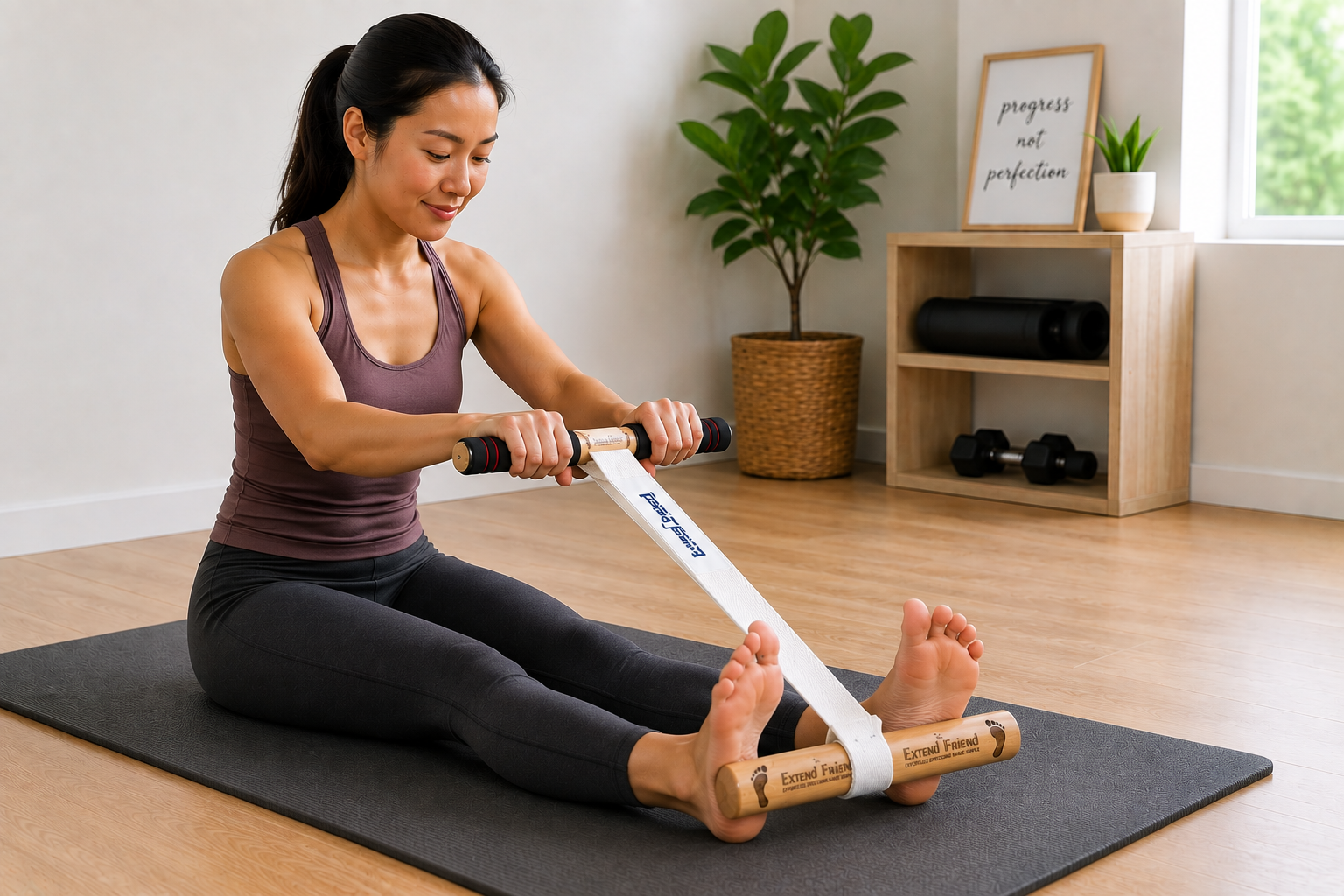
The Extend Friend Full Body Stretching Device from The Friend Brand combines a portable wooden stretching tool with an adjustable strap for a variety of assisted stretching positions.
Its design can be incorporated into appropriate stretching routines for areas such as the hamstrings, calves, hips, ankles, shoulders, and other parts of the body.
9. Focus on Consistency Instead of Intensity
Improving flexibility is generally a gradual process. Trying to force a dramatic change during one stretching session is not necessary.
A comfortable routine that you can repeat consistently is more practical than pushing too hard and then needing to stop.
You might make stretching part of an existing routine, such as:
- After light exercise
- After sitting for an extended period
- During a morning movement routine
- As part of an evening wind-down routine
10. Stretch Both Sides of Your Body
When stretching one side of your body, remember to give the opposite side attention as well.
You may notice that one side feels tighter or moves differently from the other. Do not force the tighter side to match immediately. Stay within a comfortable range and progress gradually.
11. Remember to Breathe While Stretching
It is easy to hold your breath when concentrating on a stretch.
Instead, breathe normally and try to remain relaxed. If you find yourself tensing your body or holding your breath, reduce the intensity of the stretch.
12. Create a Comfortable Stretching Space at Home
You do not need much room or elaborate equipment to create a useful stretching area.
A clear section of floor, an exercise mat, a stable chair, or a wall may be enough for many basic stretches and mobility exercises.
Keep the area clear of objects that could interfere with movement or balance.
How Long Should You Hold a Stretch?
There is no single duration that is appropriate for every person, stretch, or situation.
The important point is to use controlled movement rather than bouncing or forcing yourself into an uncomfortable position. Choose a duration that allows you to remain relaxed and maintain control.
If a particular exercise program, healthcare professional, trainer, or physical therapist has given you specific instructions, follow those recommendations.
How Often Should You Stretch to Improve Flexibility?
The most useful schedule is one you can perform consistently.
Some people prefer short stretching sessions several times throughout the week, while others include gentle stretching as part of a regular daily movement routine.
Your activity level, current mobility, schedule, and individual needs can all affect what frequency is practical for you.
Stretching vs. Mobility: What Is the Difference?
Stretching and mobility are closely related, but they are not exactly the same.
Stretching generally focuses on moving muscles and tissues through a range of motion.
Mobility involves your ability to move through a range of motion with control.
A well-rounded home flexibility routine can include both gentle stretching and controlled mobility exercises.
Can Beginners Improve Flexibility at Home?
Yes. Many basic flexibility exercises require little or no equipment and can be performed at home.
Beginners should focus on simple movements, comfortable ranges of motion, and consistency rather than attempting advanced stretches immediately.
As your routine becomes more familiar, you can gradually add other stretches or supportive equipment that fits your needs.
Using Extend Friend for Assisted Stretching at Home
If certain stretches are difficult because you cannot comfortably reach your foot or maintain a stable hand position, an assistive stretching tool may provide another way to perform the movement.
The Extend Friend combines a wooden stretching device with an adjustable strap, providing another way to position your hands and feet during appropriate assisted stretches.
A stretching tool should support controlled movement rather than encourage you to force yourself beyond a comfortable range.
Frequently Asked Questions About Improving Flexibility at Home
How can I improve my flexibility at home?
Start with a simple routine that includes gentle stretches for several major areas of the body. Move gradually, avoid bouncing or forcing a stretch, and make the routine consistent enough that you can maintain it over time.
Can beginners improve flexibility at home?
Yes. Many basic stretches can be performed at home with little or no equipment. Begin gradually, use controlled movements, and stay within a comfortable range of motion.
Do I need special equipment to become more flexible?
No. Many flexibility exercises can be performed without special equipment. A mat, stable chair, wall, stretching strap, or assistive stretching tool may provide support or make certain exercises easier to perform.
Should stretching hurt?
No. You should not force yourself through pain while stretching. If a movement causes pain, numbness, weakness, dizziness, or another concerning symptom, stop the exercise.
Should I stretch every day?
There is no single stretching schedule that is ideal for everyone. The appropriate frequency depends on your routine, activity level, mobility, and individual needs. Consistency is generally more practical than occasional aggressive stretching.
Can a stretching device help with flexibility?
A stretching device can provide an additional point of support or help extend your reach during appropriate exercises. It does not replace gradual practice, controlled movement, proper technique, or professional guidance when needed.
How long does it take to improve flexibility?
There is no universal timeline because flexibility varies from person to person. Your starting range of motion, activity level, consistency, age, individual anatomy, and the movements you practice can all affect progress.
Build a Flexibility Routine You Can Maintain
Learning how to improve flexibility at home does not require a complicated program. Start with a few comfortable stretches, warm up with light movement, move gradually, breathe normally, and focus on consistency.
As your routine develops, you can add different stretches, mobility exercises, or supportive tools depending on what works for you.
If you want a portable tool designed for assisted full-body stretching, explore the Extend Friend Full Body Stretching Device.
This article provides general educational information and is not medical, physical therapy, or rehabilitation advice. If you have an injury, medical condition, significant or persistent pain, balance concerns, or limitations that affect exercise, consult an appropriate qualified healthcare professional before beginning a new stretching routine.