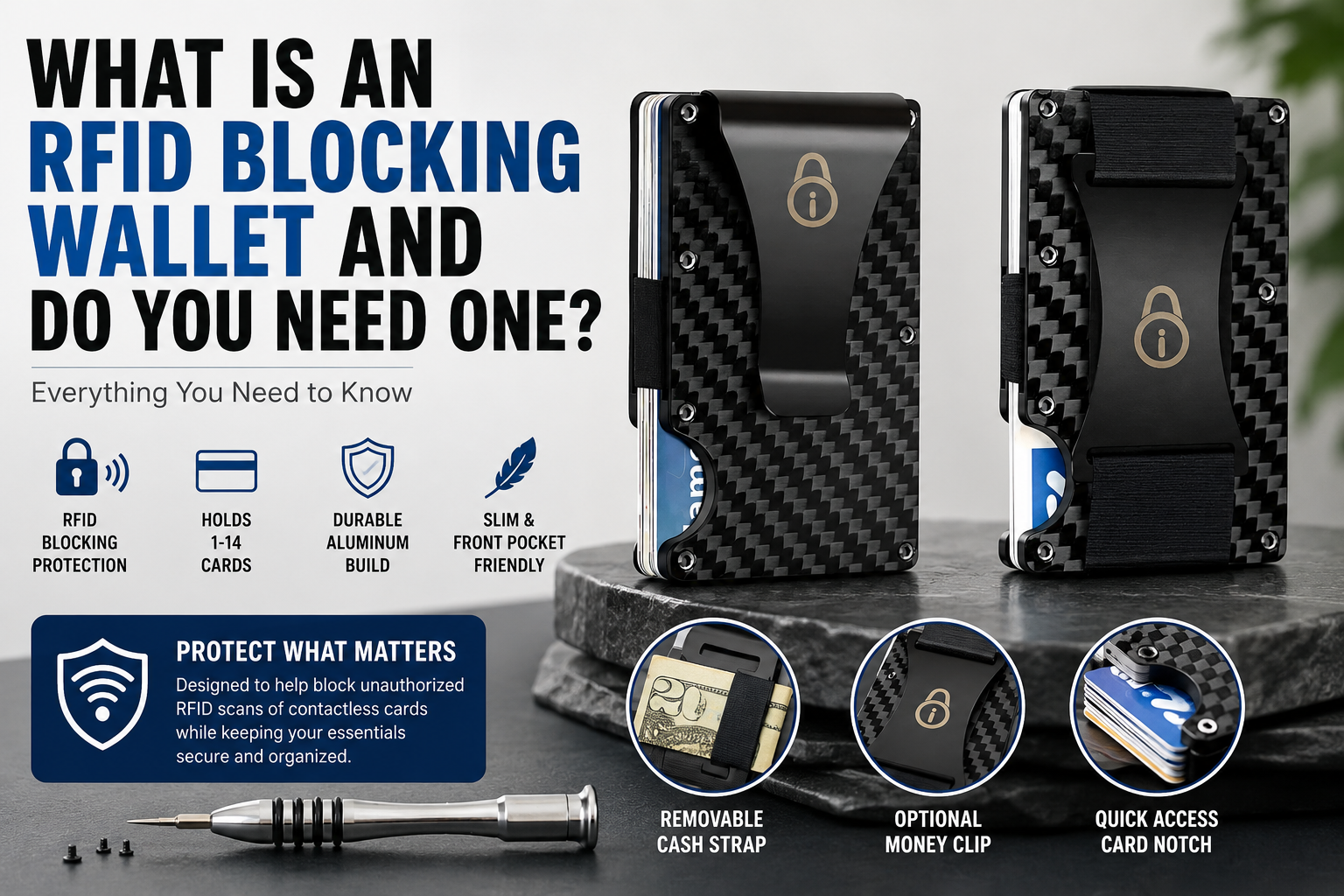
An RFID-blocking wallet is designed to reduce radio-frequency communication between compatible contactless cards and outside RFID readers while the cards are stored inside the wallet. It adds a physical layer of shielding around compatible credit cards, debit cards, identification cards, and other RFID-enabled items.
If you’re wondering what an RFID-blocking wallet is, how RFID blocking works, or whether you need one, this guide explains the technology, its limitations, how to use an RFID wallet, and what to look for when choosing one for everyday use.
What Is an RFID-Blocking Wallet?
An RFID-blocking wallet is a wallet made with materials designed to interfere with radio-frequency signals used by compatible RFID and contactless cards.
When a compatible card remains inside the shielded portion of the wallet, the wallet is intended to reduce communication between the card and an outside reader.
RFID blocking does not replace normal financial security practices. Instead, it provides an additional physical layer of protection for compatible cards.
What Does RFID Mean?
RFID stands for Radio-Frequency Identification. The technology uses radio waves to communicate between compatible chips and readers.
Some payment cards and identification cards use contactless technology that allows information to be exchanged over a short distance with an authorized reader.
What Is RFID Protection?
RFID protection generally refers to shielding designed to reduce radio-frequency communication between an RFID-enabled item and an outside reader.
In an RFID-blocking wallet, shielding materials surround compatible cards while they are stored within the protected portion of the wallet. This is intended to interfere with the radio-frequency communication those cards use with compatible readers.
RFID protection has a specific purpose and should not be considered protection against every type of identity theft, financial fraud, or card theft.
How Does an RFID-Blocking Wallet Work?
An RFID-blocking wallet uses shielding materials designed to interfere with or reduce radio-frequency communication between a compatible card and an outside reader.
The shielding creates a barrier around cards stored inside the protected portion of the wallet. When you want to use a contactless card, you generally remove it from the RFID-blocking wallet and present it to the payment terminal or compatible reader.
How to Use an RFID-Blocking Wallet
Using an RFID-blocking wallet is similar to using a regular wallet. Place compatible contactless cards inside the RFID-protected portion of the wallet when you are carrying them.
When you need to use a contactless card, remove the card from the shielded wallet and present it to the compatible payment terminal or reader. After completing the transaction, return the card to the protected portion of the wallet.
Because wallet designs can vary, follow any instructions supplied with your particular RFID-blocking wallet.
How Do RFID-Blocking Cards Work?
An RFID-blocking card and an RFID-blocking wallet are different products, although both are intended to interfere with unwanted radio-frequency communication involving compatible cards.
An RFID-blocking wallet incorporates shielding into the wallet itself. Separate RFID-blocking cards are typically designed to be carried alongside other cards and use their own blocking or interference method.
The design and effectiveness of individual RFID-blocking cards can vary, so follow the manufacturer’s specifications and instructions for the particular product.
Do RFID-Blocking Wallets Really Work?
RFID-blocking wallets are designed to reduce radio-frequency communication with compatible cards while those cards remain inside the wallet’s shielded area.
However, RFID protection has a specific purpose. It should not be viewed as protection against every type of credit card or identity fraud.
RFID blocking does not protect against threats such as phishing, compromised online accounts, stolen card numbers, malicious websites, or physical theft of the card itself.
Do All Credit Cards Use RFID?
No. Not every credit or debit card uses the same technology.
Some cards support contactless payments, while others may rely on chip insertion, a magnetic stripe, or other methods.
Look for the contactless symbol on your card or check with your card issuer if you are unsure whether a particular card supports contactless communication.
Can Someone Scan a Credit Card Through Your Wallet?
Compatible contactless cards are designed to communicate with readers over short distances. An RFID-blocking wallet is designed to reduce that communication while the card remains inside the shielded portion of the wallet.
Even when using an RFID-blocking wallet, continue following normal card-security practices, including monitoring transactions, protecting account credentials, and reporting suspicious activity promptly.
Do You Need an RFID-Blocking Wallet?
Whether you need an RFID-blocking wallet depends on the cards you carry and your personal preferences.
If you carry compatible contactless cards and want an additional physical layer of shielding, an RFID-blocking wallet may be worth considering.
If you already want a slim everyday wallet, choosing one with RFID-blocking construction can provide this feature without requiring separate RFID sleeves for individual cards.
What Should You Look for in an RFID-Blocking Wallet?
RFID protection is only one factor to consider when choosing a wallet. A good everyday wallet should also fit the way you carry and access your cards and cash.
Consider:
- RFID-blocking construction
- Card capacity
- Overall size and thickness
- Front-pocket or back-pocket carry
- Material and durability
- Ease of card access
- Cash storage
- Everyday comfort
RFID-Blocking Wallet vs. Regular Wallet
The primary difference between an RFID-blocking wallet and a regular wallet is the addition of shielding materials designed to reduce radio-frequency communication.
A regular wallet can organize and physically protect your cards but does not necessarily include RFID-blocking materials.
An RFID-blocking wallet combines ordinary card storage with an additional shielding layer for compatible cards.
Why Choose a Slim Front-Pocket RFID Wallet?
Traditional wallets can become bulky as cards, receipts, and cash accumulate.
A slim front-pocket wallet encourages you to carry essential items while reducing unnecessary bulk. Many people also prefer having their wallet in a front pocket where it can be easier to access and keep track of.
Combining a slim design with RFID-blocking construction provides card organization and RFID shielding in one compact wallet.
How Many Cards Should a Slim Wallet Hold?
The ideal card capacity depends on what you carry every day.
If you carry only a few essential cards, a compact wallet may be sufficient. If you regularly carry identification, payment cards, insurance cards, access cards, and other items, greater capacity may be useful.
The Secure Friend RFID Blocking Slim Wallet from The Friend Brand is designed to hold approximately 1 to 14 cards, giving users flexibility depending on how much they carry.
Secure Friend RFID Blocking Slim Wallet
Secure Friend combines RFID-blocking construction with a compact front-pocket wallet design.
It features:
- RFID-blocking construction
- 6061-T6 aluminum body
- Carbon-fiber-style finish
- Capacity for approximately 1 to 14 cards
- Quick-access card notch
- Removable cash strap
- Optional money clip
- Slim front-pocket design
What Materials Are Used in Secure Friend?
Secure Friend uses a rigid 6061-T6 aluminum body with a carbon-fiber-style finish.
The aluminum construction provides a slim, structured design compared with traditional folding wallets made entirely from fabric or leather.
Its compact form is designed for everyday pocket carry while keeping cards organized.
How Do You Access the Cards?
Quick card access is particularly important with a compact wallet.
Secure Friend includes a card-access notch designed to help push the cards upward so you can retrieve the card you need.
This provides a different approach to card organization than a traditional folding wallet with multiple individual card slots.
What Is the Secure Friend Cash Strap?
Secure Friend includes a removable cash strap for people who want to carry folded bills along with their cards.
The strap holds folded cash against the outside of the wallet without requiring a traditional full-size bill compartment.
What Is the Money Clip Option?
Secure Friend also includes an optional money clip.
This allows users to choose their preferred method for carrying cash rather than being limited to one fixed wallet configuration.
Is an RFID-Blocking Wallet Good for Travel?
A compact RFID-blocking wallet can be convenient for travel because it combines card organization, a slim form factor, and RFID shielding for compatible cards.
RFID blocking should still be only one part of travel security. Protect your identification and phone, keep important belongings secure, monitor financial accounts, and avoid carrying unnecessary cards or documents.
Frequently Asked Questions About RFID-Blocking Wallets
What is an RFID-blocking wallet?
An RFID-blocking wallet contains shielding materials designed to reduce radio-frequency communication between compatible cards and outside readers while the cards remain inside the protected portion of the wallet.
What is an RFID blocker?
An RFID blocker is a product or material designed to interfere with or reduce radio-frequency communication involving compatible RFID-enabled items. RFID-blocking wallets incorporate this type of shielding into the wallet itself.
What is RFID protection?
RFID protection refers to shielding intended to reduce radio-frequency communication between compatible RFID-enabled cards or items and outside readers.
How does an RFID-blocking wallet work?
It uses materials that interfere with or reduce the radio-frequency signals used for communication between compatible contactless cards and RFID readers.
How do you use an RFID wallet?
Keep compatible contactless cards inside the RFID-protected portion of the wallet while carrying them. When you want to use a contactless card, remove it from the shielded wallet and present it to the compatible payment terminal or reader.
Do RFID-blocking wallets really work?
RFID-blocking wallets are designed to reduce radio-frequency communication with compatible cards while those cards remain within the wallet’s shielded area. They are not designed to prevent every form of financial or identity fraud.
Is an RFID wallet necessary?
Not necessarily. Whether you want one depends on the cards you carry and your preferences. If you carry compatible contactless cards and want an additional physical layer of RFID shielding, an RFID-blocking wallet may be worth considering.
Do I need an RFID-blocking wallet?
That depends on the types of cards you carry and your preferences. People who carry compatible contactless cards may prefer having an additional physical layer of RFID shielding built into their everyday wallet.
Does RFID blocking protect against all credit card fraud?
No. RFID blocking addresses radio-frequency communication with compatible cards. It does not protect against phishing, stolen account information, compromised websites, physical theft, or other forms of fraud.
Can I still use contactless payment with an RFID-blocking wallet?
Yes. You generally remove the contactless card from the shielded wallet before presenting it to a compatible payment terminal.
How many cards does Secure Friend hold?
Secure Friend is designed to hold approximately 1 to 14 cards, depending on card thickness and how the wallet is configured.
Does Secure Friend hold cash?
Secure Friend includes a removable cash strap and an optional money clip, providing two options for carrying folded bills.
What Is an RFID-Blocking Wallet and Is It Worth It?
An RFID-blocking wallet can be a practical choice if you want a compact everyday wallet that also provides an additional layer of shielding for compatible contactless cards.
RFID protection should not be the only consideration when choosing a wallet. Card capacity, size, material, card access, cash storage, durability, and everyday comfort are also important.
If you prefer a slim aluminum wallet with RFID-blocking construction, adjustable card capacity, and multiple cash-carrying options, explore the Secure Friend RFID Blocking Slim Wallet.